
Overview
Found early, treated simply.
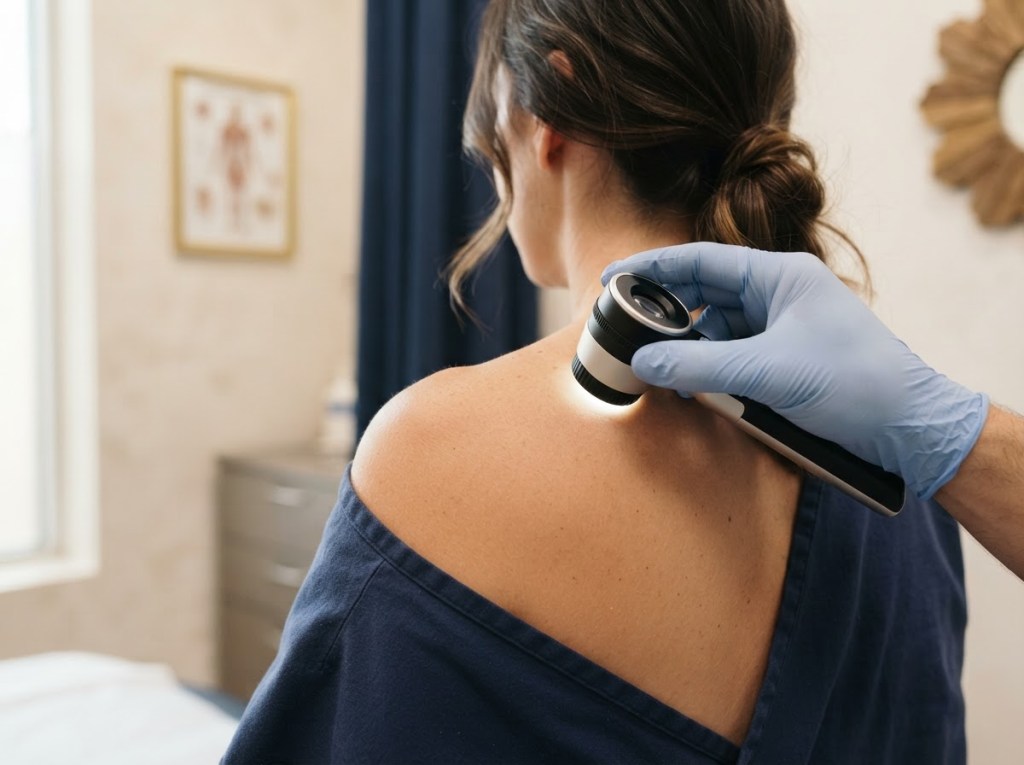
Australia has one of the highest rates of skin cancer in the world, and Queensland’s sunshine plays a big part. Many skin cancers can be found early by checking your skin and having changes looked at. Treatment is usually simpler when a problem is found sooner.
Dr Oveem Istanis performs skin checks, biopsies and excisions here at My Medico.
Who should think about it
Is a regular skin check for you?
- Higher risk
- Fair skin that burns easily, many moles, a past skin cancer, a close family history of melanoma, or lots of time outdoors for work or leisure. Risk also rises with age.
- Signs to have checked
- A new spot, a spot that changes in size, shape or colour, one that looks different from the others, or a sore that bleeds, itches or does not heal within a few weeks.
- How often
- There is no single schedule that suits everyone. Your GP will suggest how often based on your own risk.
What to expect
Your GP asks about your health, sun exposure and any spots that worry you, then examines your skin, often with a dermatoscope (a small handheld magnifying light). It does not hurt. You can ask for a chaperone, and let your GP know if there are areas you would prefer to discuss first.
Please remove nail polish and make-up if you can, so all areas can be seen.
If a spot needs a closer look
Your GP may suggest watching it, photographing it to compare later, taking a small sample (a biopsy), or removing it (an excision). Biopsies and excisions are done in our treatment room under local anaesthetic, and samples go to a pathology laboratory. More about treatment and procedures
Fees
A skin check is charged at standard GP consultation fees, with a Medicare rebate; a full check usually needs a long appointment. Weekday appointments are bulk billed for patients under 16, aged 65 and over, and DVA card holders. If you need a biopsy or excision, reception will tell you the cost before it goes ahead. See Fees and Medicare.
General information only. Protect your skin when the UV index is 3 or above, and use sunscreen of SPF50 or higher, as Cancer Council recommends.